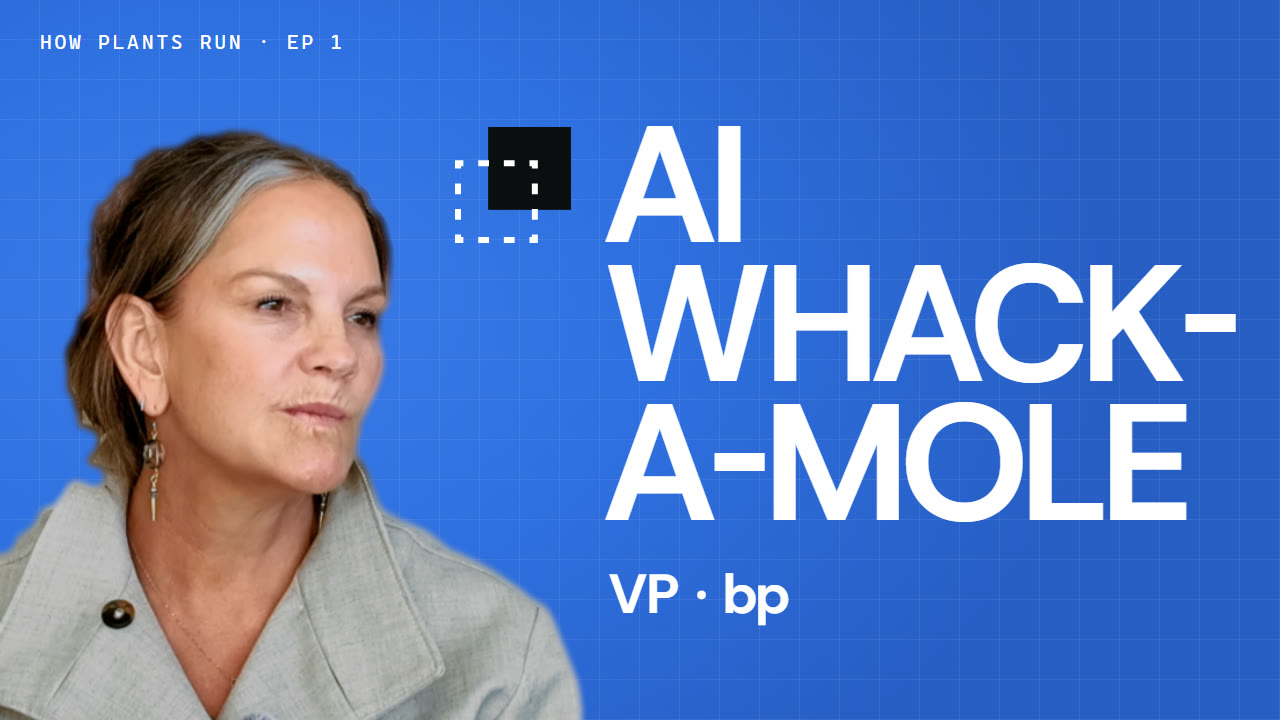
Episode 18 min

AI on a broken process stays broken

Natalie Thompson, VP Reliability & Maintenance, bp

“All you’re getting is a broken digital process.”

Natalie Thompson, VP Reliability & Maintenance at bp, on what is actually working with AI in maintenance, and what isn’t. The industry is under pressure to put AI on something, she says, and too often it lands on top of a process that is already broken.

She walks through what is getting results quickly (one view of the 50 or 60 sources an engineer checks to solve a problem), her three pillars of asset management, and why vision, governance and people come before the technology.

Recorded in person at the OPEX in Oil & Gas Summit, Houston, November 4, 2026. Hosted by Gabriel Gonçalves.

From the conversation

A broken process, digitized

Natalie started with what has to come before the technology. The industry is under pressure to adopt AI, and teams end up putting it on whatever is in front of them. She wants a vision of where you need to go and a real problem to solve first, then a roadmap and governance around it.

“Right now I feel it’s a lot of whack-a-mole where we’re putting AI on top of a workflow or on top of a process where the process is broken. And so then all you’re getting is a broken digital process.”

Watch at 01:18

What the engineer checks in the morning

Asked where AI pays off now in energy, she named something plain. A reliability engineer goes to 50 or 60 places to work out one problem, and connecting those sources puts the data in one view. For her that is one of three pillars of asset management. The other two are a strategy (the availability targets and what the equipment has to do) and the front-line workers (what hurts them and what wastes their time).

“You’re an engineer, you wake up in the morning and you go, hmm, what’s my machine doing today? You can see the correctives, you can look at the shift notes, you can start to understand what’s out there from a predictive standpoint.”

Watch at 03:04

Work done versus work imagined

She said AI isn’t there to take jobs away. It should help people do their jobs better, and the technology has to fit the way work really gets done on the front line.

“Technology will have all the fun, fancy solutions. But again, if it’s not solving a problem that you’re really facing in the front line, it’s just having digital, fun, fancy solutions.”

Watch at 07:16

Run a plant? Come on the show.

Be a guest, opens a short form